Helikopter oder Microlight?
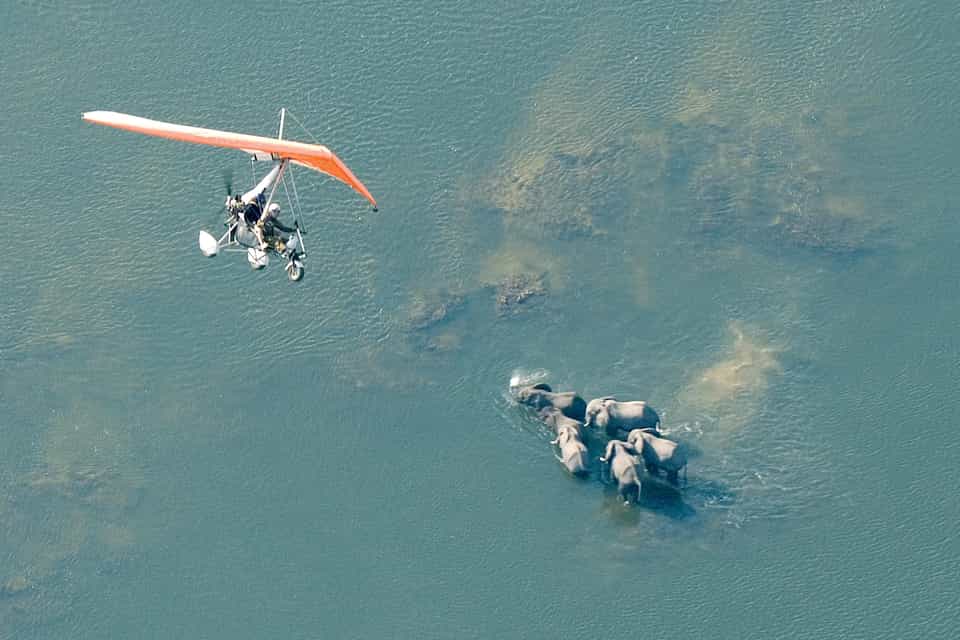
Ein Microlight befördert den Piloten und einen Passagier im offenen Cockpit — keine Kabine, kein Fenster zwischen dir und der Gischt. Dieser eine Unterschied treibt alles andere: Du fliegst allein mit dem Piloten statt in einer Kabine mit vier oder fünf Leuten, du spürst die Luft, und die Fälle liegen direkt unter dir, ohne etwas im Bild. Ein Reisender, der beides gemacht hat, bringt es auf den Punkt: Das Microlight sei „ein gutes Stück besser“ gewesen als der Helikopterflug. Die Kompromisse sind genauso konkret: Microlights fliegen nur auf der sambischen Seite (Batoka Sky in Livingstone), sie sind wetterabhängiger, und deine eigene Kamera bleibt am Boden.
Die zwei Routen
Der 15-minütige Flug, angeboten in den ruhigeren Morgenstunden, zeigt die Fälle, die Inseln direkt flussaufwärts und den Sambesi selbst — mit der Schlucht, die der Fluss gegraben hat, klar sichtbar darunter. Der 30-minütige Flug führt weiter am Sambesi entlang, umkreist die Fälle, quert dann den Mosi-oa-Tunya-Nationalpark und endet mit einem tiefen Überflug auf der Suche nach Wildtieren — Reisende berichten von Elefanten, Nashörnern, Zebras, Flusspferden und Krokodilen aus der Luft.
Die Kamera-Regel — und warum sie kein Trick ist
Das Angebot des Verkäufers ist eindeutig: Kameras, Videogeräte und Taschen sind an Bord nicht erlaubt. Stattdessen fotografiert und filmt der Betreiber den Flug und verkauft das Paket nach der Landung vor Ort — Reisende bestätigen, die Dateien erhalten zu haben, und beschreiben sie als gute Andenken. Wenn dir eigene Aufnahmen wichtiger sind als das Fliegen unter freiem Himmel, passt der Helikopter besser — dort sind Kameras willkommen.